iz paehr

  • cables & protocols
  • access & tech
  • play & experiments
  • info
  • Crip Fieldwork Toolkit
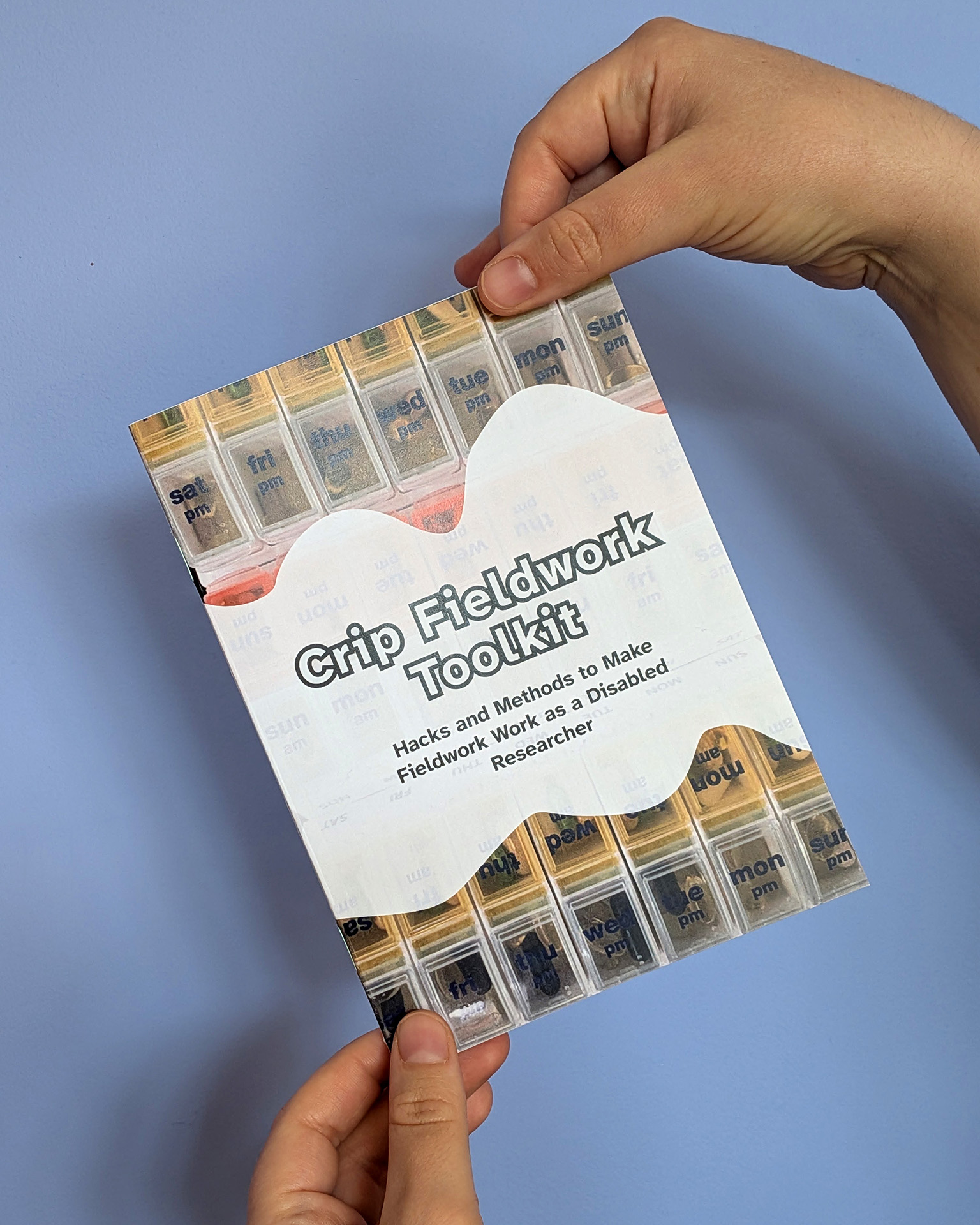
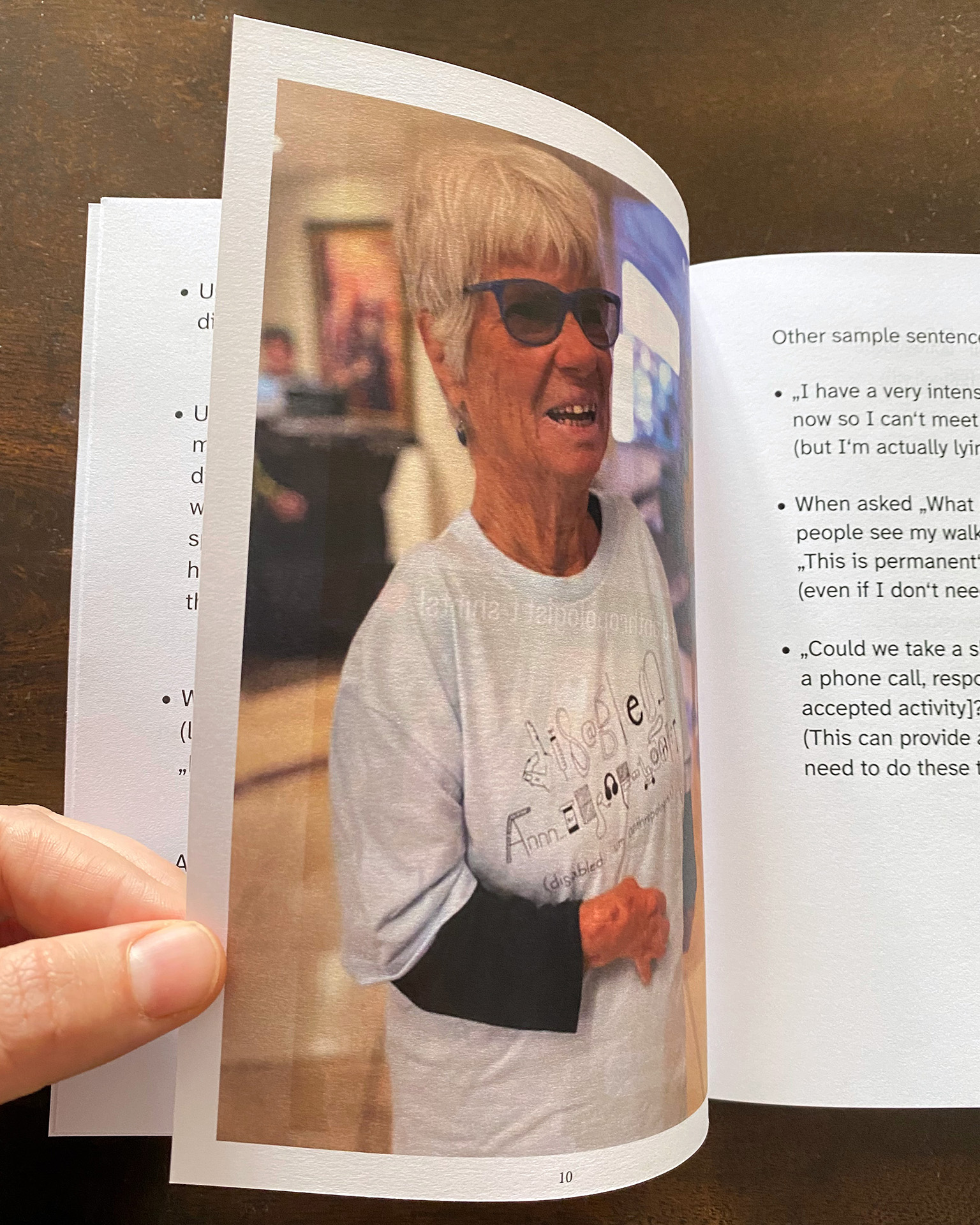
    Two hands of a white person, Iz, hold a booklet into the camera. On the cover, the title reads: Crip Fieldwork Toolkit. Hacks and Methods to Make Fieldwork Work as a Disabled Researcher. This text is displayed atop a curved white banner, that sits playfully stop a vivid photgraph of a pillbox. The pills form a mesmerizing pattern. Photo of a hand flipping through the opened booklet on a dark wooden table. The opened page shows a photograph of of white, queer, disabled anthropologist Sumi Colligan who is in her 70s. She is smiling and has short grey hair, blue glasses, and is wearing a long black shirt layered with the light blue disabled anthropologist t-shirt.

    Workshop & PDF Toolkit, 2026, as part of Cripping Ethnographic Methods at the Institute for European Ethnography at Humboldt University Berlin

    This toolkit offers hacks and methods for disabled researchers doing fieldwork.

    The Crip Fieldwork Toolkit was developed during the 2026 workshop "Tooling Access: Developing Methods and Hacks for Crip Fieldwork" by Iz Paehr, as part of the project Cripping Ethnographic Methods. The project is organised by the Collective Access working group of the Institute for European Ethnography at Humboldt University Berlin.

    Disabled researchers face significant barriers when doing fieldwork. During the workshop, we collected and invented hacks, methods, and dreams towards crip fieldwork. We are sharing them with you all in this zine.

    DOWNLOAD (PDF): Crip Fieldwork Toolkit

    Contributors: Alice von Bieberstein, Aoife Donnellan, Code Beschler, Elliot Mrozinski, Erin L. Durban, and their extra large heating pad, Iz Paehr, Kim Fernandes, Magdalena Buchczyk
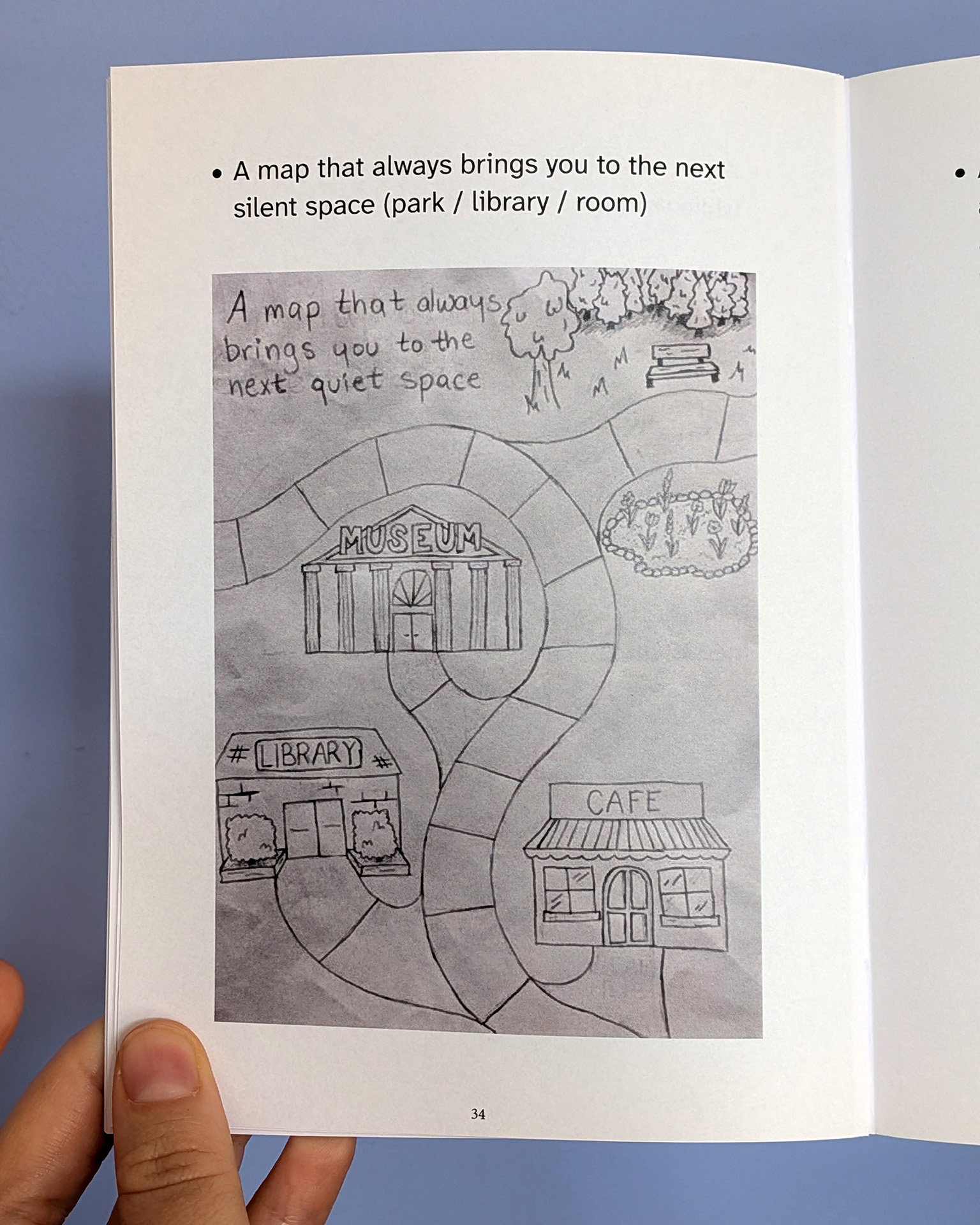
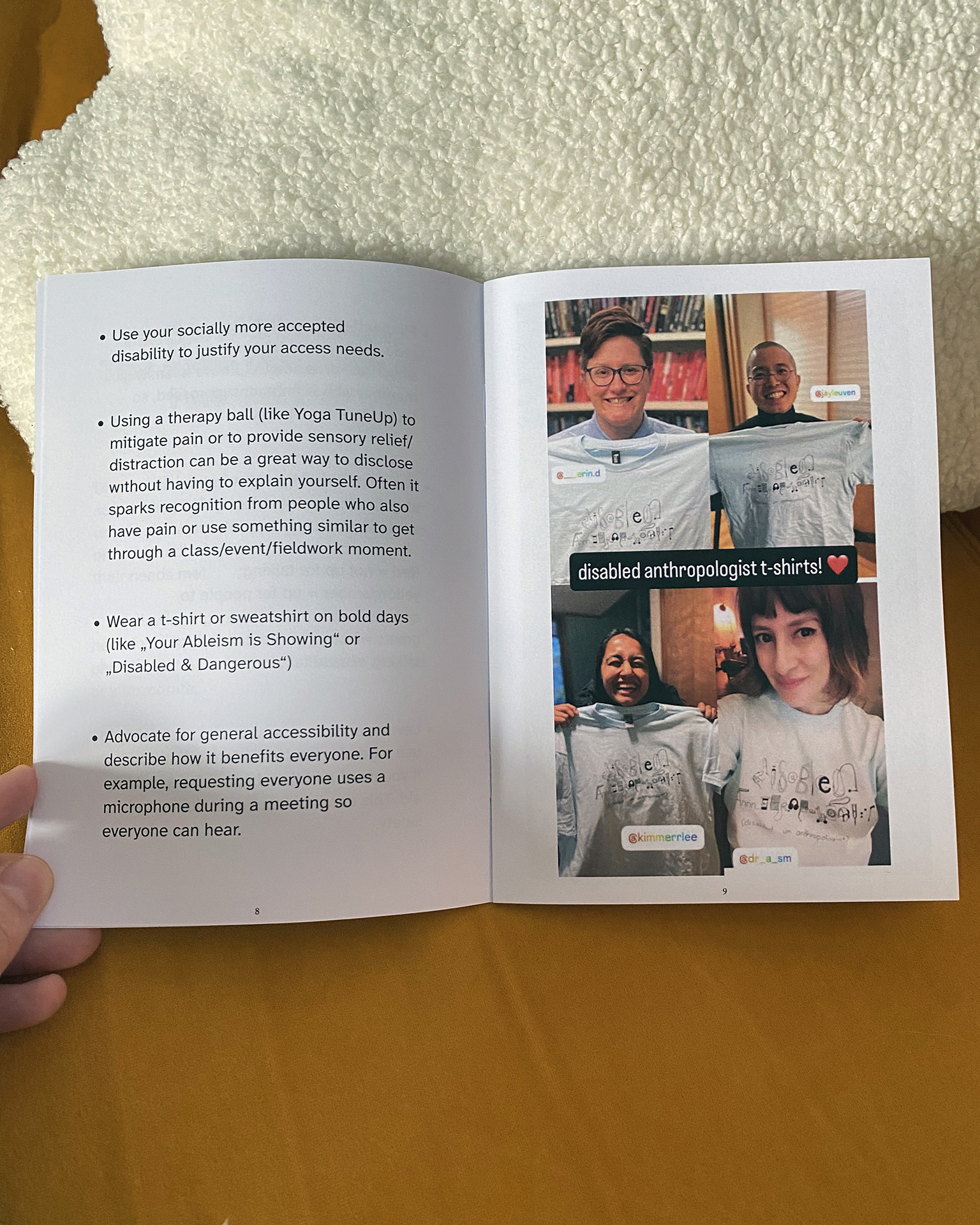
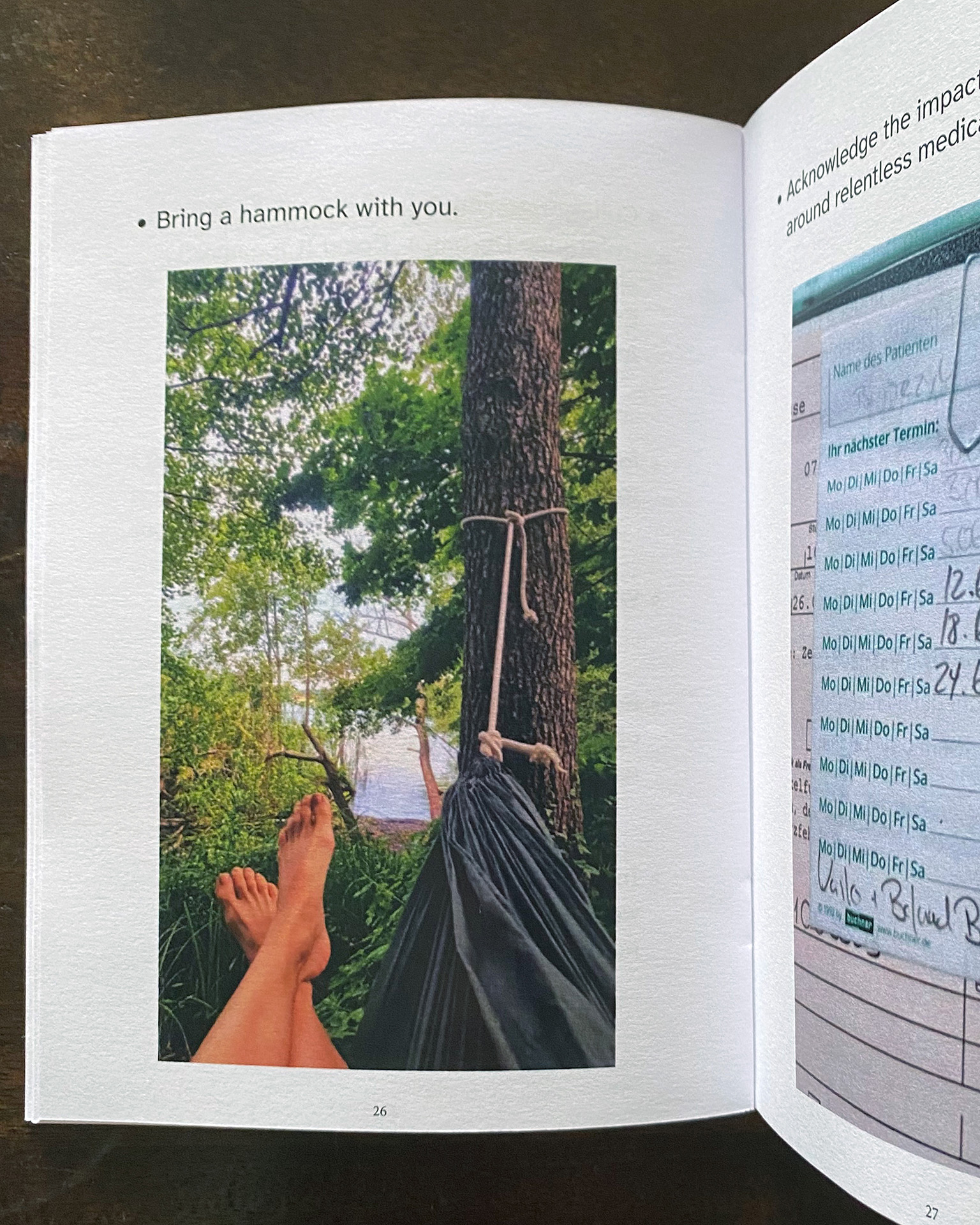
    This page, photographed against a blue wall, shows a sketch. The sketch is titled: A map that always brings you to the next silent space (park/library/room). It shows buildings on a map connected by a sidewalk. The locations on the map include a park, a flower bed, a museum, a cafe, and a library. The booklet lies opened on a soft couch, propped up against a cloud shaped fuzzy pillow. The opened pages show advice in bullet points on the left side. The first bullet point reads: Use your socially more acceptable disability to justify your access needs. On the right side, there is a photo collage of four photos of smiling people with a light blue tshirt that reads disabled anthropologist where each letter represents something related to diverse disability communities with disabled, um, anthropologist written below as a translation. The person on the top left is a white nonbinary scholar with shirt brown hair and glasses with books behing them. On the top right, an Asian man with close-cropped hair, glasses, and a crutch hold up his t-shirt. The bottom left is a brown nonbinary South Asian scholar with black hair. On the bottom right is a selfie of a light-skinned Mestiza scholar with short brown bobbed hair and bangs wearing her tshirt. Photo of the booklet opened at a page that start with the following advice: Bring a hammock with you. Below, there is a photo taken from the perspective of a person using a hammock. They have crossed their legs, which are resting on a hammock that is fixed to the trunk of a large tree. In the background there are many leafy green trees as well as the shore of a lake.
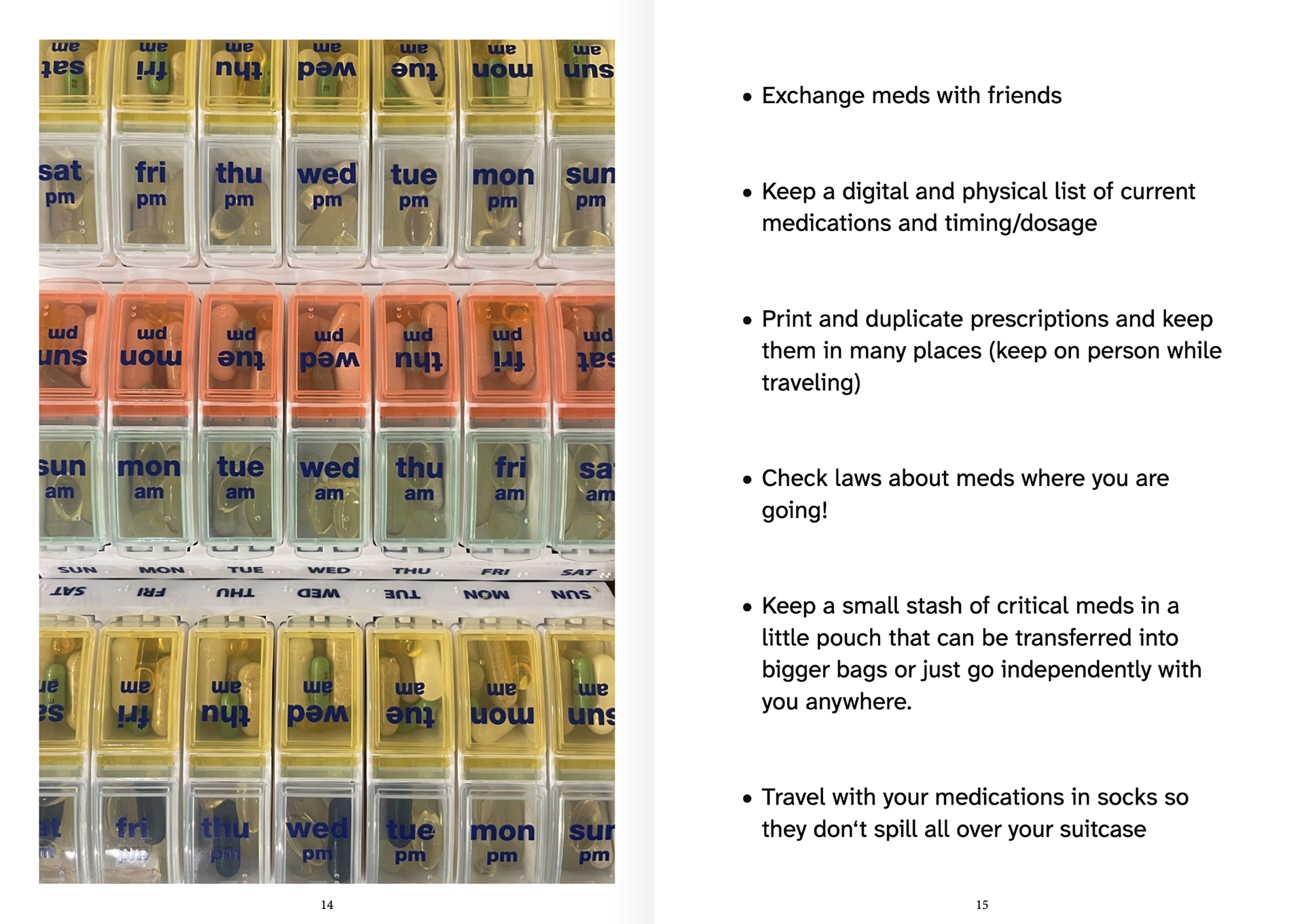
    This screenshot shows a double page from within the PDF booklet. On the left page, a photo of pillboxes is displayed. On the right page, tips are displayed in bullet points. For example, the first tip reads: Exhange meds with friends. The full text can be found within the PDF.