Feeling Virtual: An Archive of Touch
S+T+ARTS EC(H)O Residency with Salzburg Festival Archive and Ars Electronica, 2025
Feeling Virtual: An Archive of Touch is an arts-design-research project that experiments with access to cultural heritage by developing tactile virtual worlds. Informed by the tactile knowledges of disabled people, this work challenges the sensorial hierarchies and ableist assumptions built into XR technologies and vibrates with the potentials of accessible tactile worlds.
The project practices towards how technology design and descriptive accessible language practices can facilitate tactile and multi-sensorial access to archival materials. It gets in touch with materials from the Salzburg Festival Archive through an Extended Reality (XR) artwork Archive of Touch that engages vibrotactile sensations alongside auditory and visual experiences. It also contributes methods and a workbook to the emerging access practice of Tactile Descriptions, and prototypes towards alternative XR controllers that take the diversity of bodies and minds as a beloved starting point for tinkering, hacking, and making.
XR Artwork: Archive of Touch
Archive of Touch is a tactile Extended Reality experience. In our “Look, Don’t Touch” culture, Archive of Touch values disabled ways of knowing the world through touch. In consultation with disabled experts, Archive of Touch develops crip access aesthetics that invite disabled and nondisabled audiences to get in touch with materials from the Salzburg Festival Archive. Instead of focusing on the visual as a primary way of knowing, Archive of Touch brings forth a multi-sensorial experience of historical artifacts.
Tactile Descriptions
The Tactile Descriptions Workbook is an online resource / accessible PDF and website that guides interested scholars, archivists, designers and disabled access makers through the process of putting experiences of touch into language(s). The workbook is online via tactiledescriptions.com.
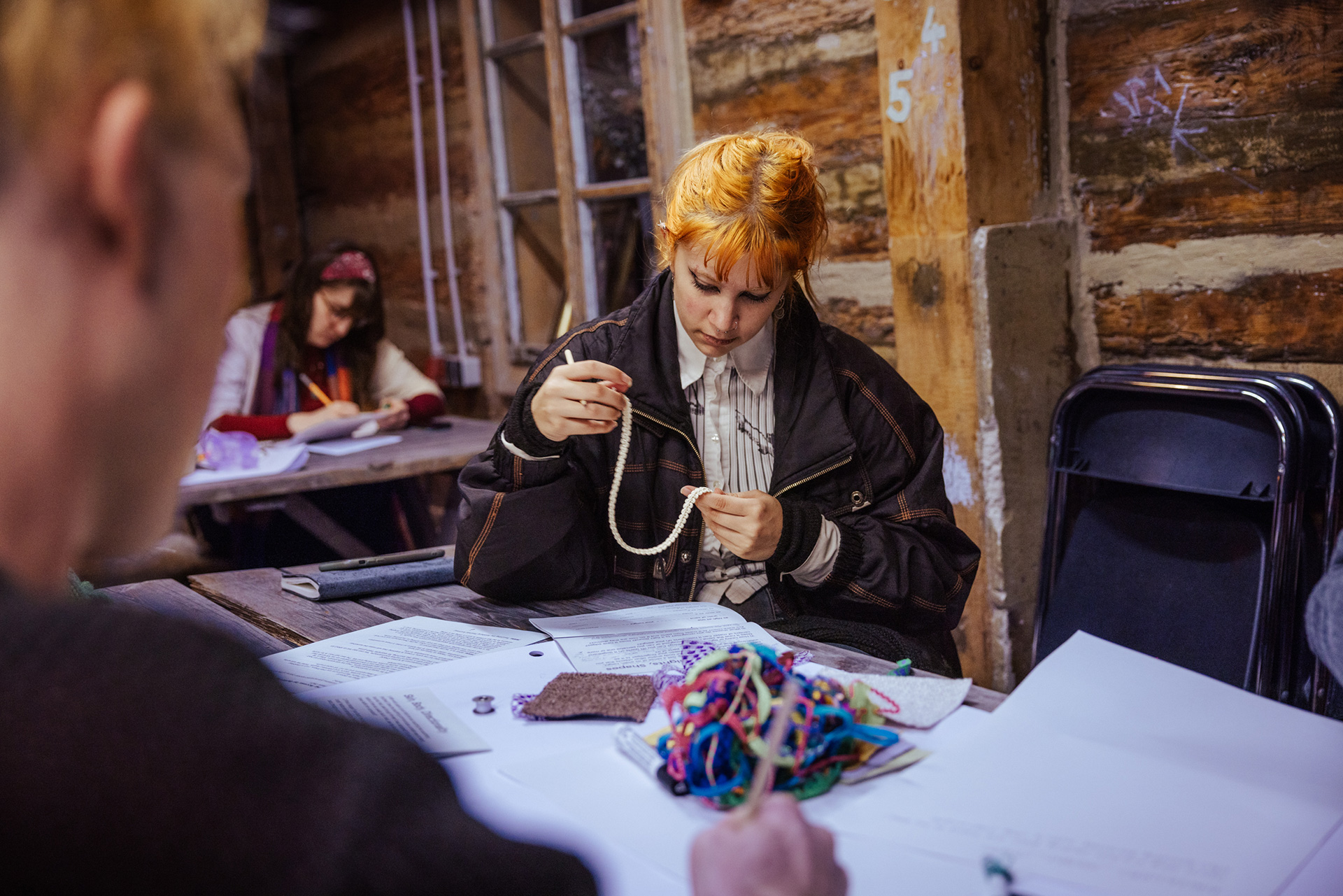
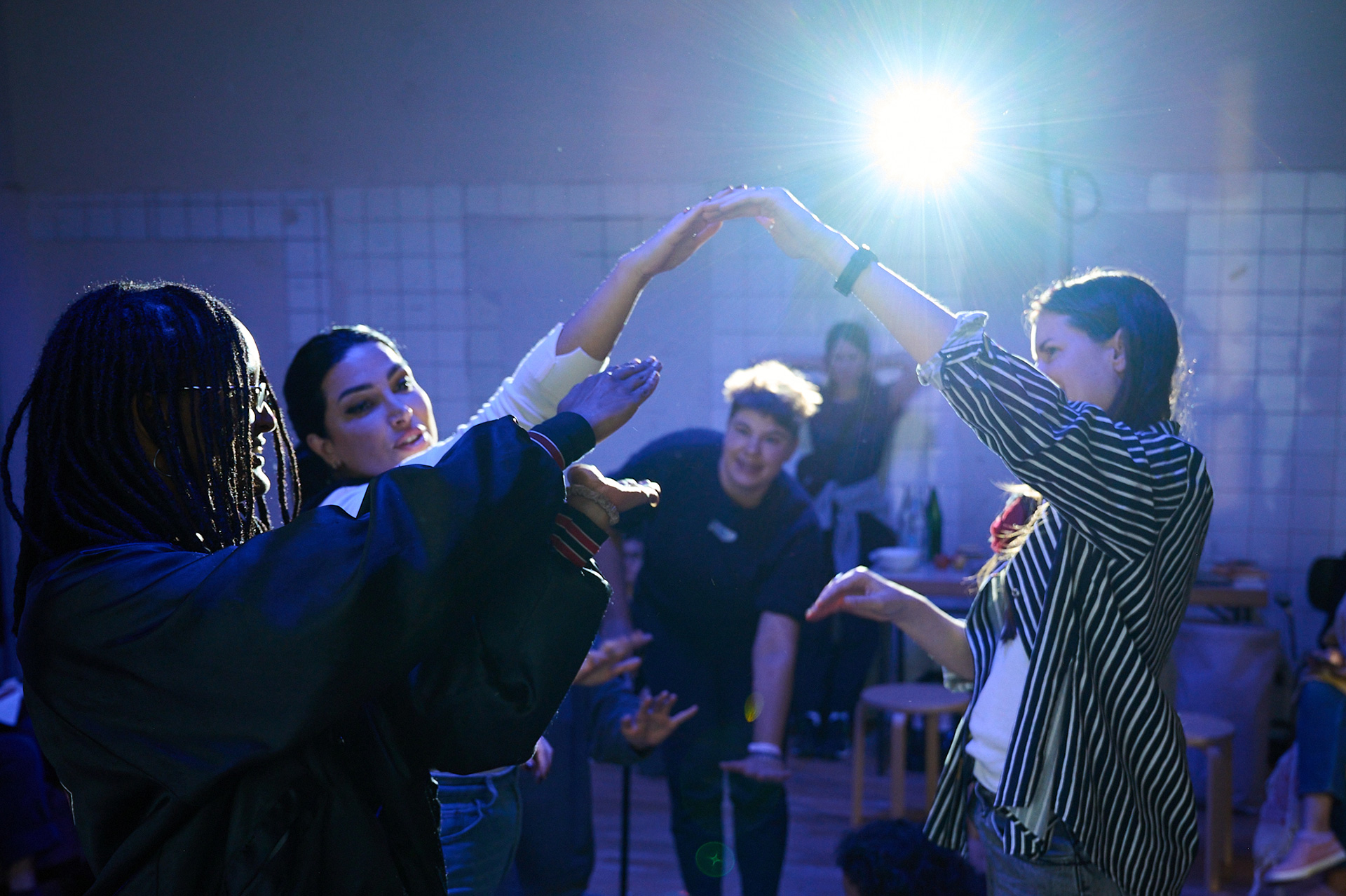
Left: Tactile sensing during the workshop ‘Touching-Making Access by Building Tactile Archives’ at Science Week Berlin 2025. © Photo: Liesa Johannsen. Right: Feeling virtual objects during my contribution ‘Vibrating Towards Crip Virtual Worlds We Can Touch’ at IMPACT25: Countercrafts: On Practices of Resistance, Repair and Reworlding, © Photo: Katharina Ley / PACT Zollverein.
Tactile Patches
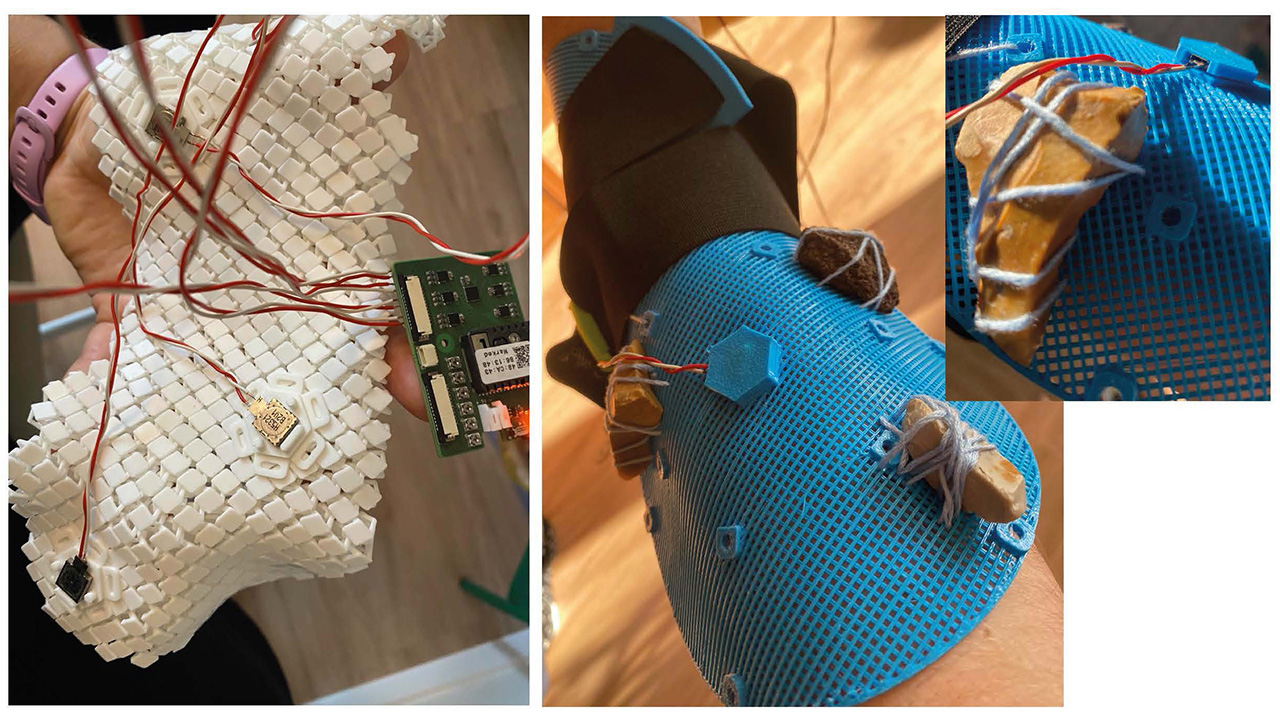
Tactile Patches are prototypes for experimental alternative game controllers that communicate the outlines and textures of virtual objects through vibrotactile sensations. They emerge out of a critique of VR as inaccessible and propose designs that can be held and worn differently than hand-centered existing hardware. Throughout the residency, different designs and technological configurations were prototyped, tested and iterated on. Exchange with Dennis Wittchen of the Sensorimotor Interaction Group moved the project from DIY electronics and design speculation closer to reality by bringing in the haptics project CollabJam.

Resources / Links
- Ars Electronica Podcast: Challenging VR’s Procrustean Bed: Disability, Tactile Epistemologies, Worldbuilding
- Exhibition: The Living Archive, Salzburg Festival, August 2026
VR/XR could be otherwise...
Feeling Virtual: An Archive of Touch prompts Virtual Reality to bend beyond its ableist status quo in which entering virtuality relies on standing, seeing, hearing and other hallmarks of nondisabledness. It starts from disabled community knowledges of how to navigate inaccessible surroundings, and asks: Which ways of moving, stimming, making noise, slowing down, using sign language, understanding things through touching them etc. can make for portals and navigational devices into haptic virtual worlds? How can digital access to archival materials become a multisensorial experience for all?
Feeling Virtual proposes that Virtual Reality can emerge through multisensorial – and nonvisual – arrangements. In line with criptastic hacking, this opens narrow definitions of VR by experimenting with how virtuality meets other senses; how starting from access transforms technology design processes; and how playing as a ‘fragile, tense activity, prone to breakdowns’ (Sicard 2014) might lead to more plural and sustainable experiences of cultural heritage.